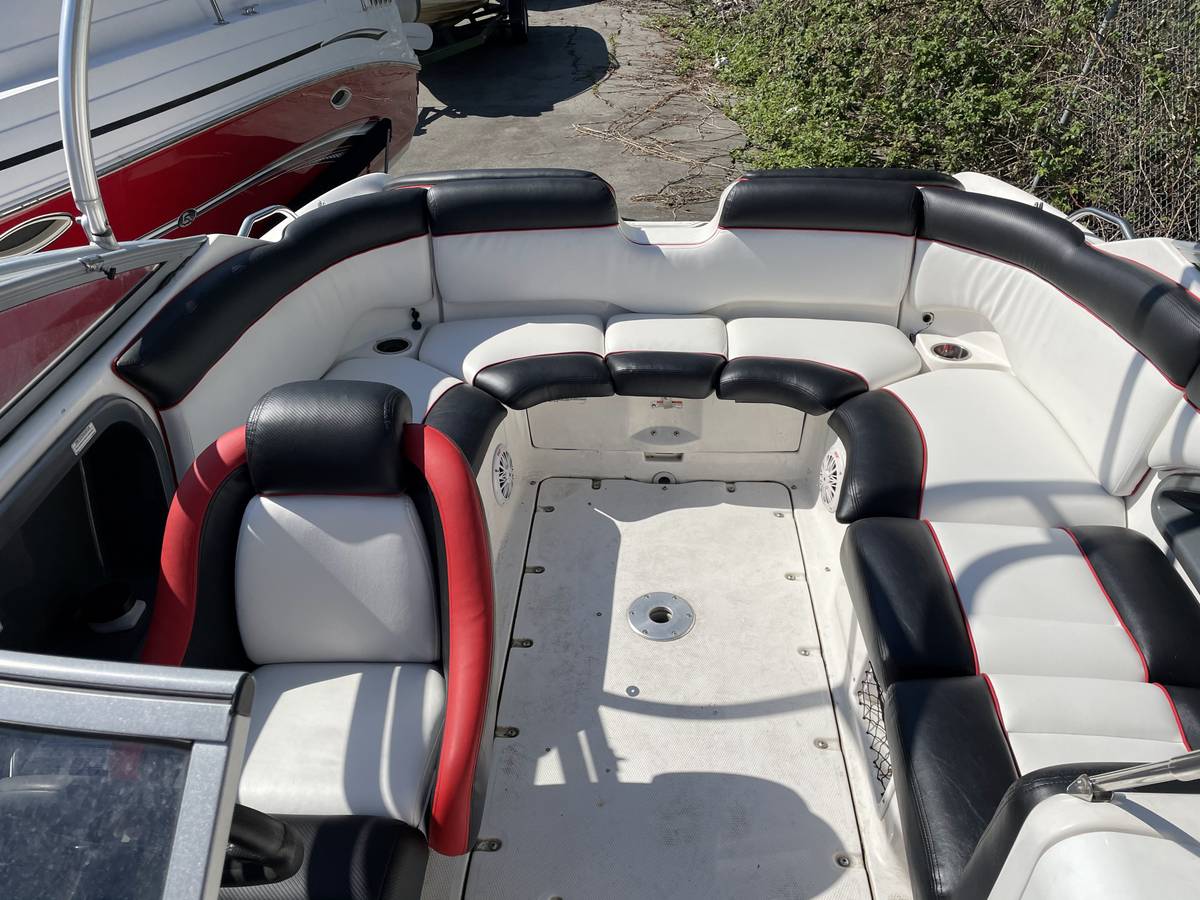
The Marine Environment Is Unforgiving
Boat upholstery is exposed to conditions that would destroy standard furniture within a single season: direct UV radiation, salt spray, standing water, mold and mildew, temperature extremes, and constant physical stress from passengers and waves.
The difference between quality marine upholstery and substandard work becomes obvious within the first year. Fading, cracking, mildew, and seam failure are the typical symptoms of using incorrect materials or techniques.
Marine-Grade Materials
Marine vinyl: The most common choice for boat seating. Quality marine vinyl is UV-stabilized, mildew-resistant, and designed to flex in cold weather without cracking. Look for products rated for outdoor marine use — not general outdoor vinyl.
Solution-dyed acrylic: Used for bimini tops, covers, and cushion fabric in applications where breathability matters. The colour runs all the way through the fibre, making it highly fade-resistant.
Stainless hardware: Any zippers, snaps, or D-rings used in a marine application must be marine-grade stainless steel. Standard hardware will rust within one season.
The Importance of Drainage
Boat cushions need to drain, not trap water. Closed-cell foam is often used in marine applications for this reason — it doesn't absorb water the way open-cell foam does. Drain holes in vinyl panels and breathable fabrics for cushion tops are standard practice.
